The Lovu guide
Preparing recordings for an avatar
You do not need a studio or a complete family archive. Start with the recordings you have and a few details about the person. We can help you understand what is useful and what may still be needed.
Start with what you already have
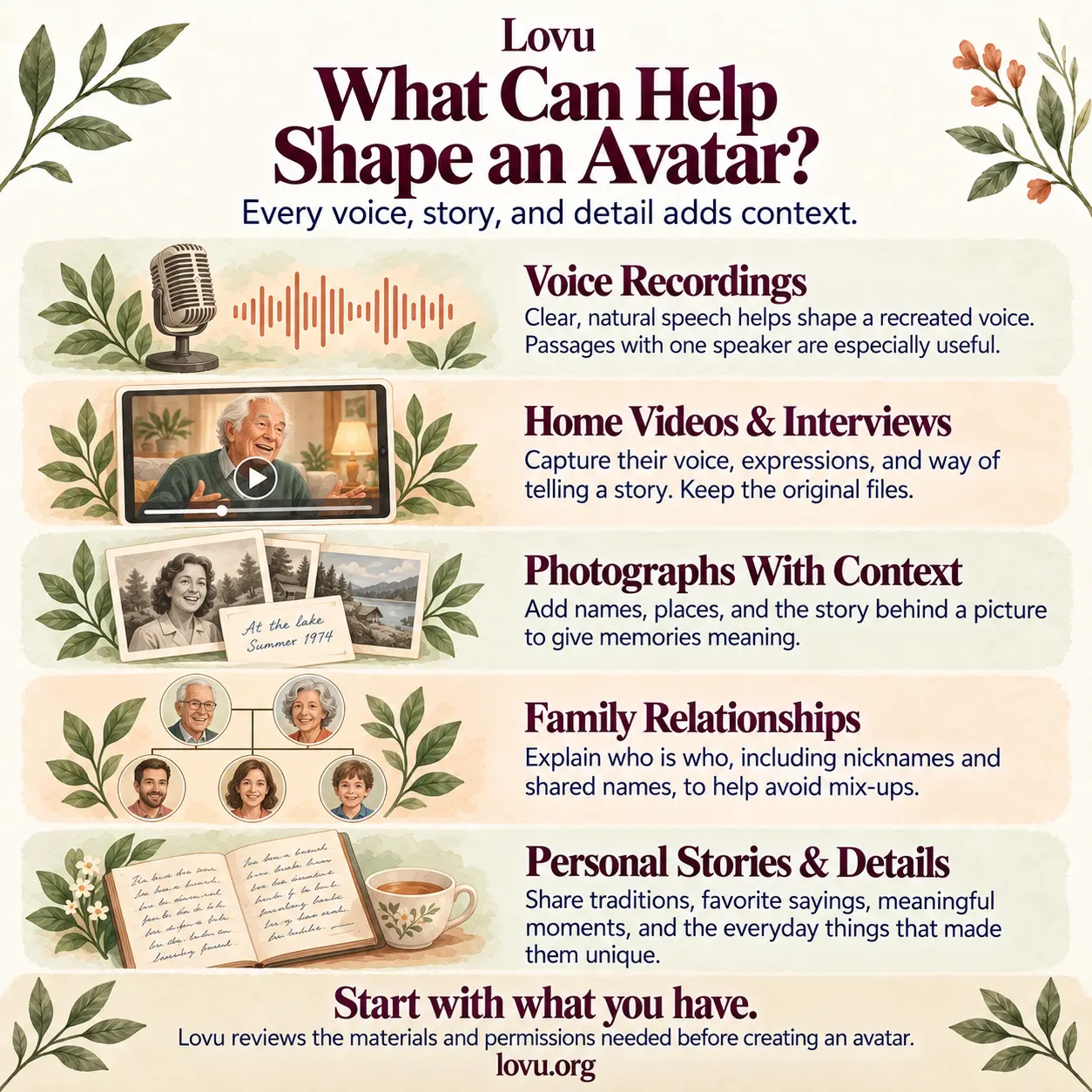
Look for interviews, home videos and recordings where the person can be heard clearly. Keep the original files. A treasured recording may hold useful stories even when its sound is not suitable for a voice sample.
Record naturally, one voice at a time
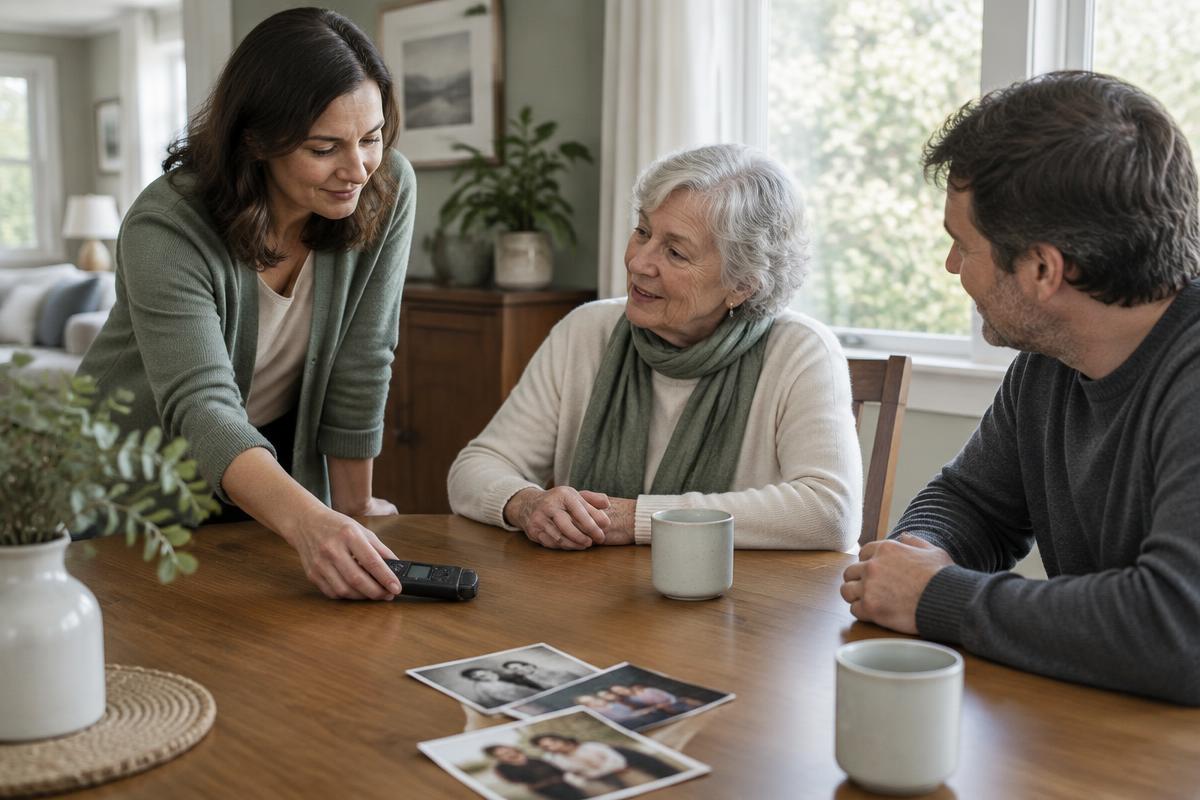
If making a new recording, choose a quiet room, place the phone nearby and play back a short test. Let the person finish before speaking. Ask something they enjoy talking about; natural speech is more useful than a performance.
Gather a little personal context
Photographs, names, relationships and favorite expressions help explain the recordings. Add a note about who is speaking and what a story refers to. You do not need to organize a whole lifetime before asking us for help.
Find meaningful story details →
Ask before including something personal
Check what the person wants shared and what should stay private. Written consent is needed before cloning a voice. If they cannot give permission or have died, we must review eligibility and available permissions first.
Let us help with the next step
Bring what you have to the first conversation. We will discuss its suitability, the preparation involved and what further material might help. You do not need to clean or alter the voice yourself.
Schedule a free consultation
Tell us about the person you have in mind and what you hope for. We will help you understand the next step, free, with no obligation.