
The Lovu guide
Their voice. Their wishes.
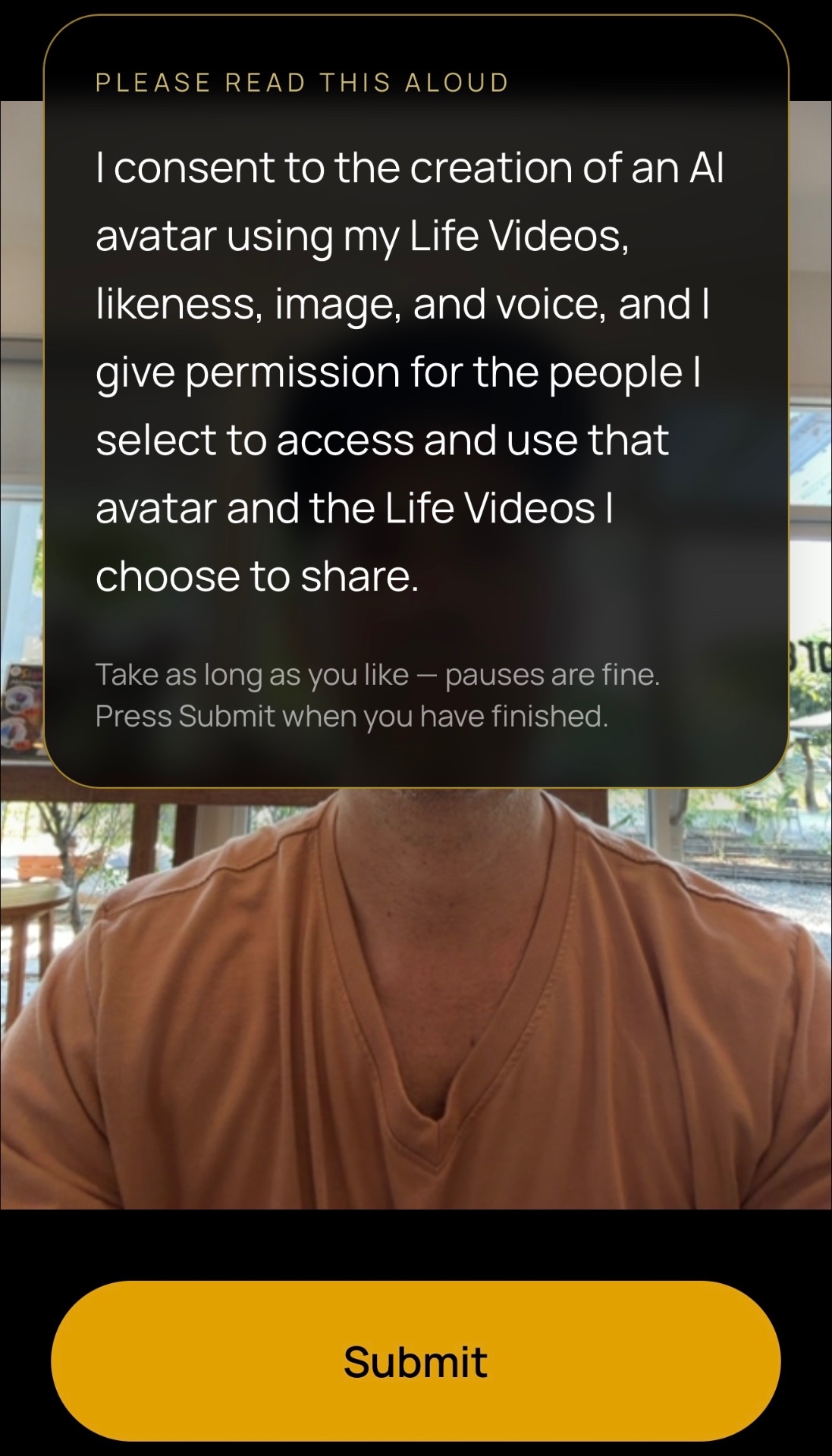
Creating an avatar is a personal decision. The person’s wishes come first: what may be used, who may connect and what should remain private. Our consent agreement and addendum put those choices in writing before a voice is created.
Do they understand what is being made?
The agreement explains that an AI avatar uses recordings, photographs and stories to generate conversations in a recreated voice. Its words are synthetic. It may say things the person never said, get details wrong or express views they do not hold. Understanding this is the starting point for consent.
What materials may be used?
The agreement covers voice, face and likeness, expressions, photographs, videos, recorded stories and biographical or family information. The person supplies only what they choose and confirms the right to share it, including a reasonable basis for including other identifiable people.
Who may create and maintain the avatar?
Permission covers creation, testing, configuration and support of the service, not unrelated commercial use of their voice or likeness. The agreement explains necessary provider processing, such as hosting, transcription and voice or video generation, and limited internal review to address problems.
Who may connect, and what may be shared?
The person chooses access and sharing permissions. The addendum asks who may use the avatar while they are alive or incapacitated, who acts as Primary and Secondary Representative, and who may change access. It also asks about sharing clips, public or commercial use, excluded topics and people. Removing access cannot retrieve copies already saved.
What rights and risks should they understand?
The agreement describes imperfect resemblance, unexpected or inaccurate statements, emotional reactions and technical errors. It includes releases and liability limits while preserving rights the law does not allow to be waived. Electronic initials, a signature and a sealed version record document the agreement.
How should their wishes guide the future?
The addendum asks how creative the avatar may be, whether it must disclose that it is AI, who may modify memories, whether information may be added after death, whose instructions control disagreements and what should happen on permanent deletion. An unanswered question is recorded as no instruction, not permission.
Uncertain permission means we pause
Owning a recording or being a relative is not consent. If the person has died, we review permissions and eligibility rather than automatically cloning from old audio. You can ask questions or decide not to proceed. For questions about legal authority or capacity, seek appropriate professional advice.
Read the actual documents
- Consent agreement (PDF) →
Complete unsigned example of the Consent and AI Avatar Authorization Agreement, version 1.1, including terms, initials, availability choices, beneficiary details and signature record.
- Consent addendum (PDF) →
Complete unsigned example of the AI Avatar Consent Addendum, version 1.2, including all 18 questions, choices, explanations and signature record. No answers are preselected.
Schedule a free consultation
Tell us about the person you have in mind and what you hope for. We will help you understand the next step, free, with no obligation.