

The Lovu guide
Finding the voice you recognize
Familiarity is often in the small things: a pause before a punchline, the rhythm of a sentence, a softly spoken phrase. We use the original voice as our reference, not simply an accent to imitate.
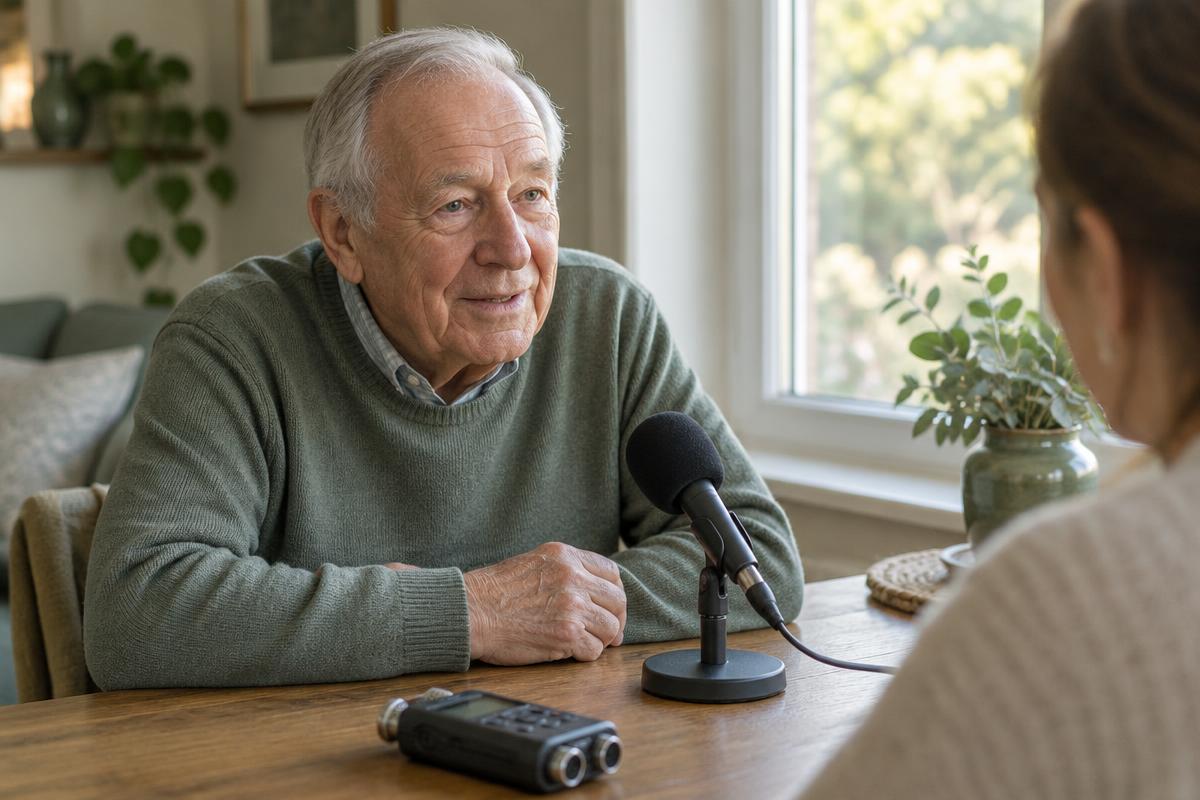
Start with the real voice
An original recording lets us hear the person as they actually spoke. We keep it for comparison throughout preparation, so the goal remains their natural voice rather than a polished voice that sounds unlike them.
Listen for more than the accent
Compare a sample with an original at a comfortable volume. Notice pitch, pace, pauses and the way sentences finish. Tell us which details feel right and which do not. Your familiarity with the person matters.
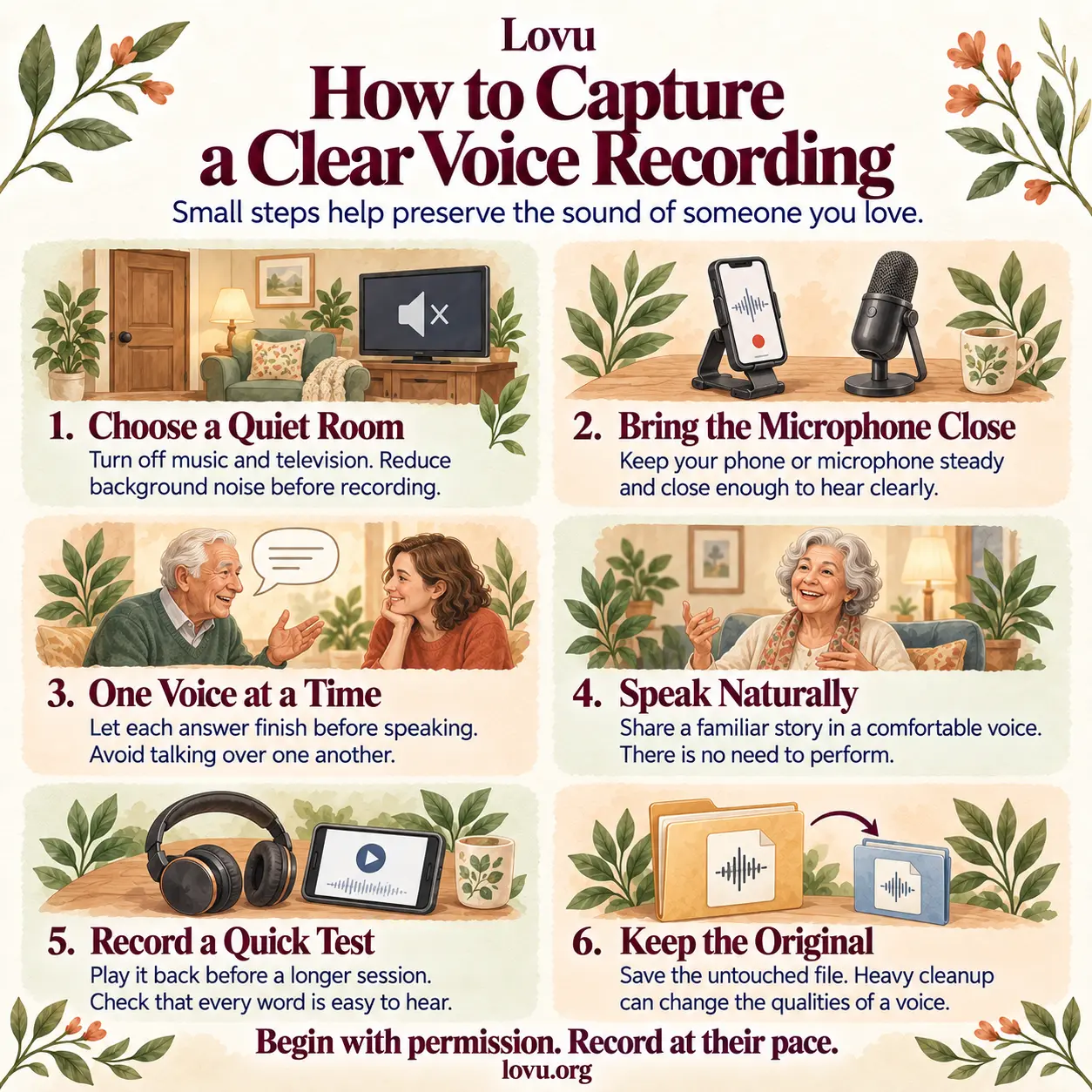
Clear speech gives us a better starting point
One speaker talking naturally is more useful than voices overlapping or music drowning out an answer. More processing does not guarantee a closer likeness. When a sample is not right, different original passages may be a better starting point.
A familiar sound, newly created words
An avatar’s voice speaks generated replies. Even a close voice match does not mean the person said those words or held those views. For exact wording, return to the original recording.
There is no need to rush approval
A voice can sound fluent without feeling familiar. If the result does not feel right, say so. We will discuss what may be possible; you can pause rather than settle for a likeness you do not recognize.
Schedule a free consultation
Tell us about the person you have in mind and what you hope for. We will help you understand the next step, free, with no obligation.