

The Lovu guide
The stories that shape an avatar
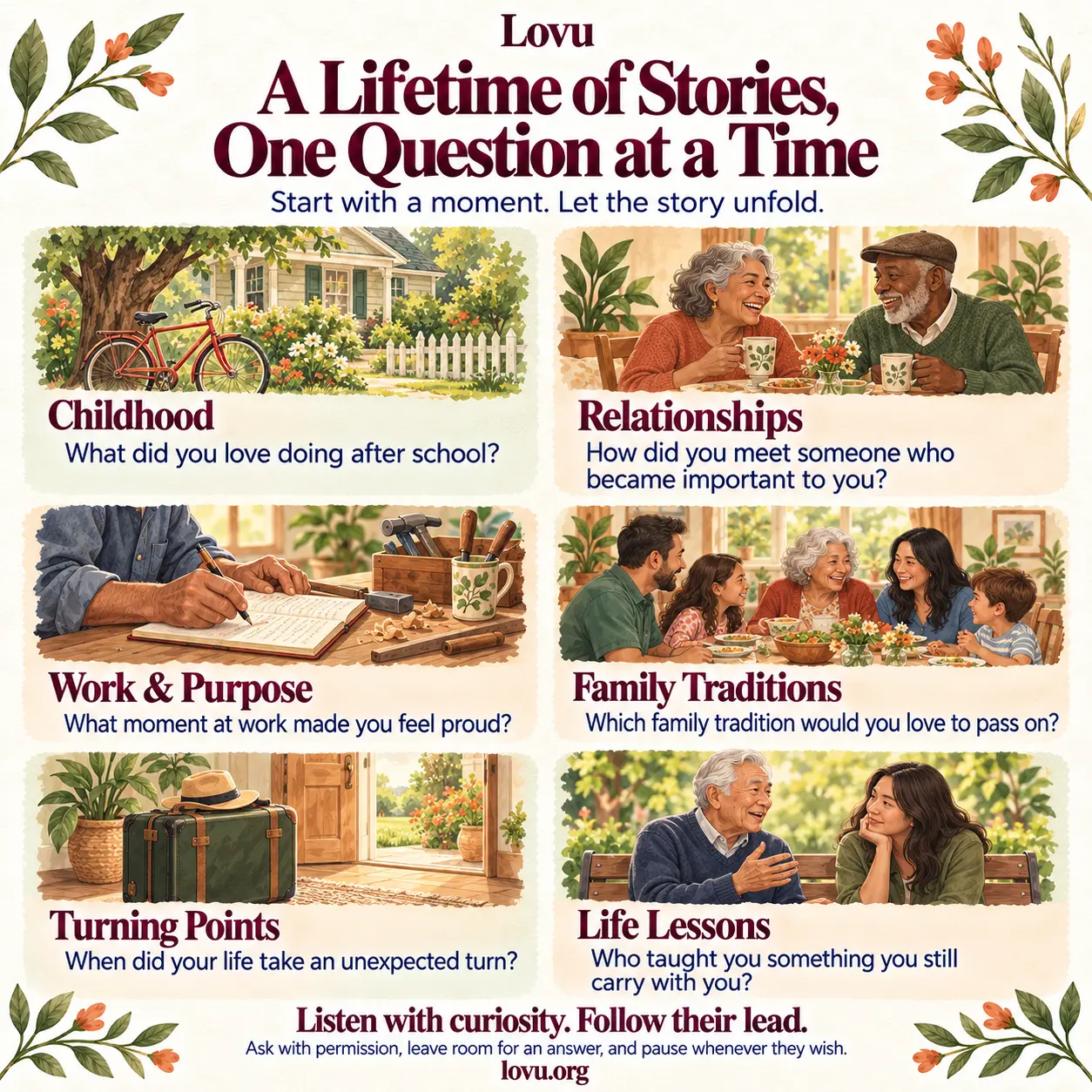
A voice is only part of what makes someone familiar. The stories they tell, the people they care about and the little details they notice help us understand the person behind it. Gathering those stories can begin with an ordinary conversation.

Look for the details only your family knows
What made them laugh? Which place felt like home? What advice did they give in their own particular way? These details help shape an avatar’s context alongside the voice recordings. A short, specific memory is a useful beginning.
Let one memory lead to another
Ask about a moment rather than a whole lifetime. “What was your first day at that job like?” leaves room for a real story. Listen, allow pauses and follow what they want to share; there is no need to work through a checklist.
Add context to what you already have
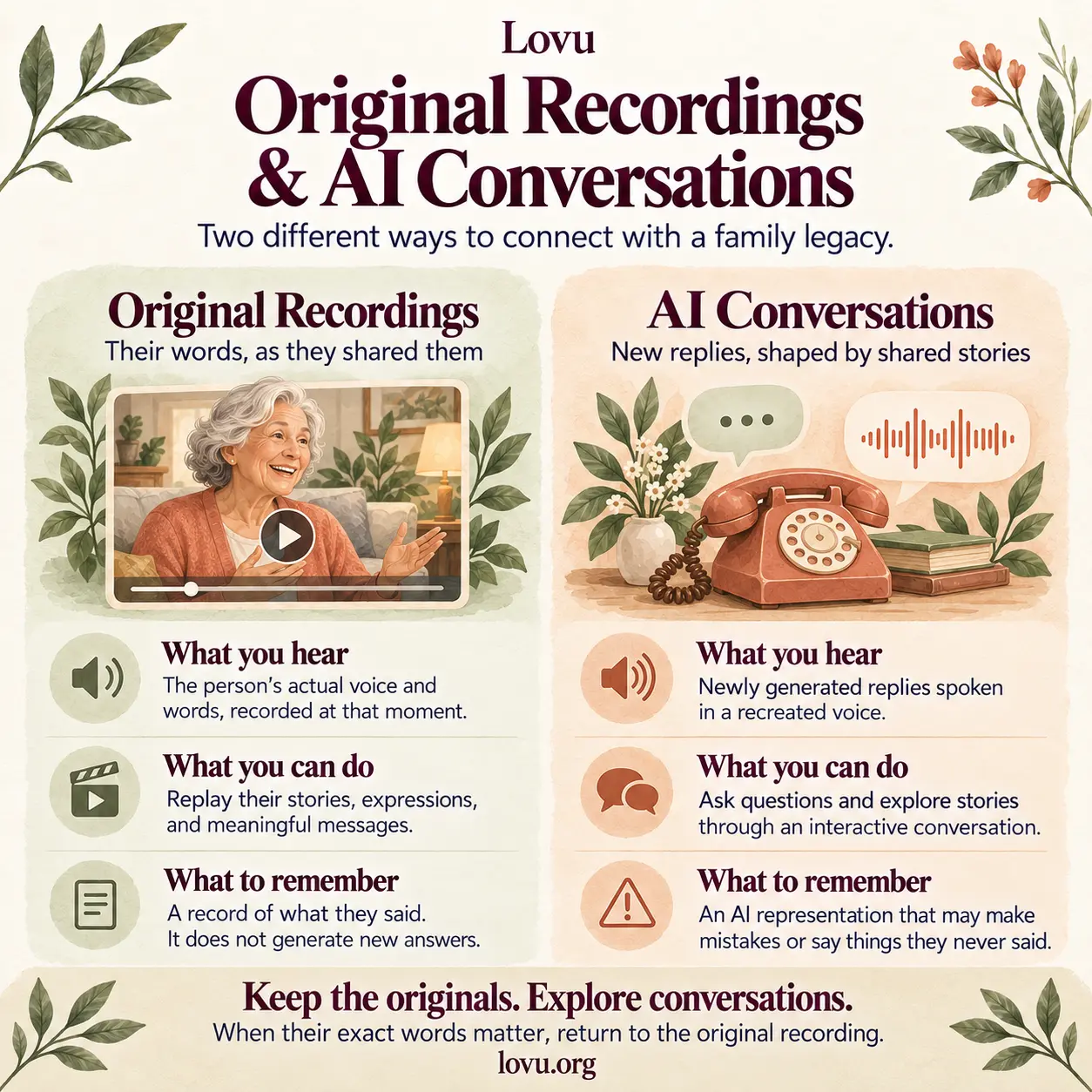
Old interviews, home videos and photographs may hold useful pieces. Note who appears, roughly when it happened and why it mattered. Keep the untouched recordings so you can always return to what was actually said.
Respect what stays private
Not every story needs to become part of an avatar. Ask which topics the person wants included or left out, and who should be able to connect. Their wishes guide the work.
Stories guide replies; they do not make them exact
An avatar uses available stories to create new conversation. It can misunderstand or invent details. The original remains the source for the person’s actual words; the avatar is a different way to engage with those memories.
Schedule a free consultation
Tell us about the person you have in mind and what you hope for. We will help you understand the next step, free, with no obligation.