
The Lovu guide
How an avatar is made
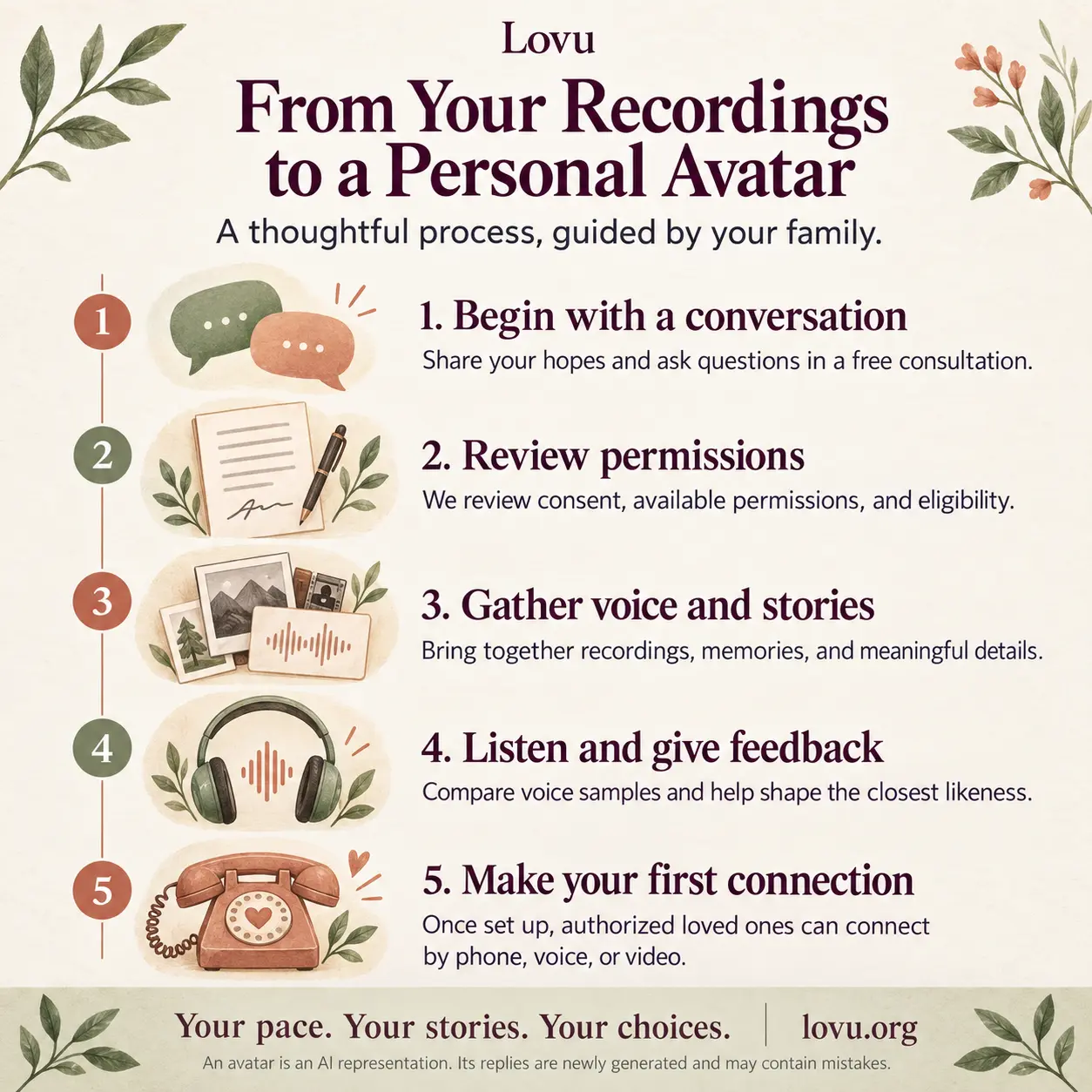
An avatar begins with a person, not a technology. Their voice, expressions, stories and way of seeing the world guide the work. We bring those pieces together carefully, with your family’s feedback along the way.
Begin with what matters to you
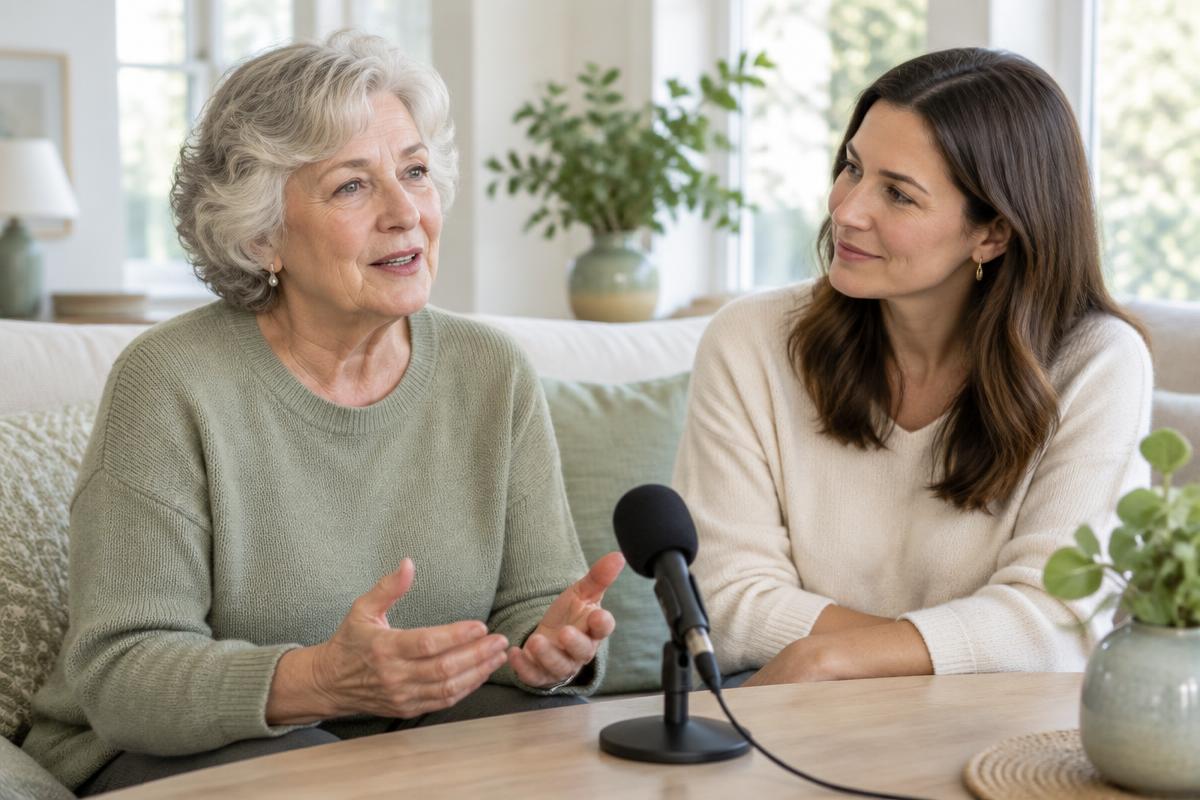
Tell us who you would like to create an avatar of and what you hope a conversation might feel like. We review your existing material and explain the work involved. There is no need to have everything ready for that first discussion.
Make sure permission is in place
Written consent comes before voice cloning. Being family or owning a recording is not enough. If the person has died, we review available permissions and eligibility before proceeding.
Gather the person behind the voice
Recordings show us how they speak. Stories, photographs and family context help us understand what matters to them. Small details, such as a favorite expression or a story they loved telling, can be as useful as major life events.
Listen, review and refine
You listen to voice samples beside the original and tell us what feels familiar and what does not. We use that feedback to guide preparation. A likeness is not guaranteed, and you should not feel obliged to approve a voice that does not feel right.
Take the first conversation gently
When the avatar is ready to try, begin with something familiar. The owner chooses who can call it. A first call is a chance to explore the experience, not a commitment to how often you will use it.
Schedule a free consultation
Tell us about the person you have in mind and what you hope for. We will help you understand the next step, free, with no obligation.